

Why The New York Times Puts Free Content First
Introduction: The New York Times Puts Free Content First, And That’s Not A Contradiction
The New York Times is one of the most successful subscription publishers in the world. So it can look odd that the New York Times puts free content first on its homepage, labels it clearly as free, and treats it as a core part of its audience strategy. If readers are supposed to pay, why give anything away?
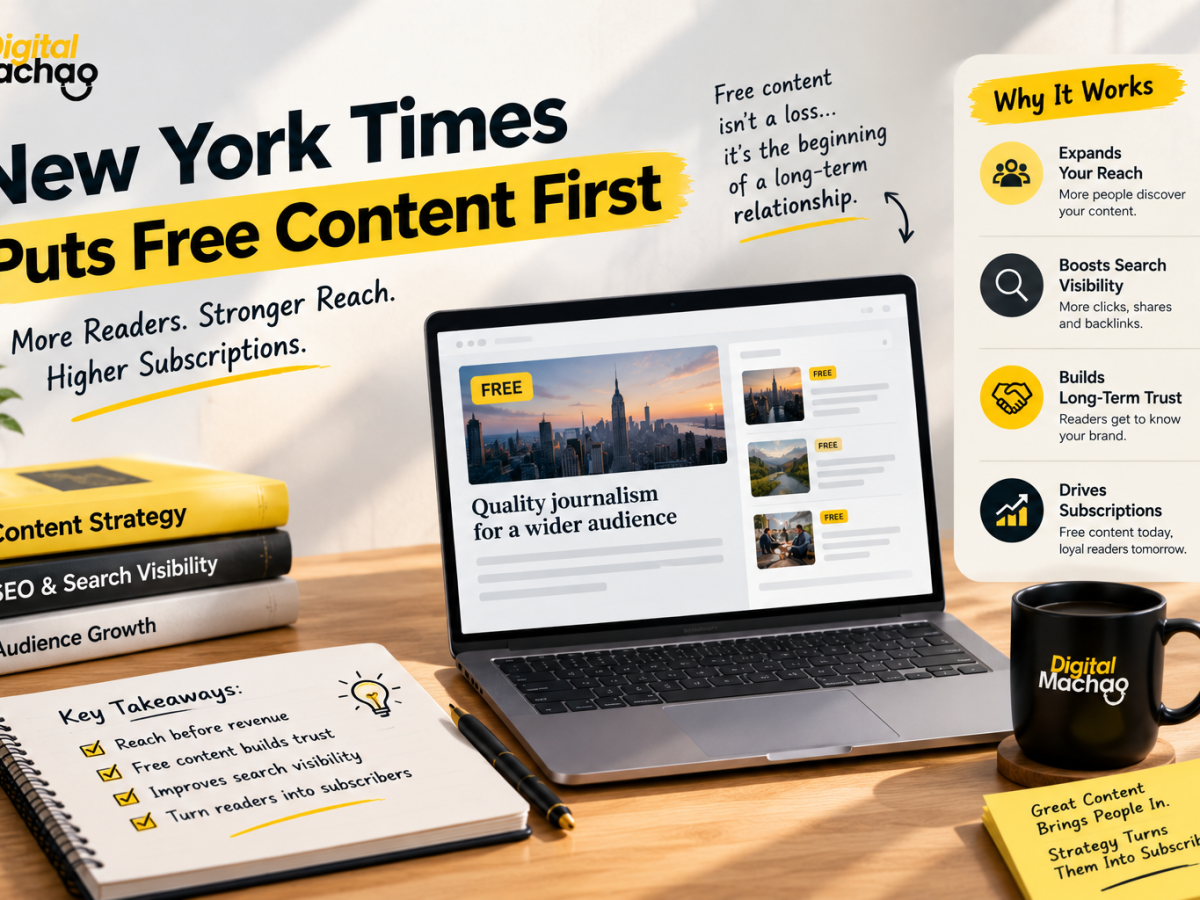
According to Harry Clarkson-Bennett, SEO Director at The Telegraph, writing for Search Engine Journal, the answer is that free content is not lost revenue. It is an introduction. In his view, the New York Times puts free content first because reach comes before revenue, and that lesson applies to almost every paywalled publisher fighting for visibility in search.
At digitalmachao.com, where we cover SEO, publisher strategy, and AI search developments, this idea stood out because it cuts against a common instinct: lock everything down and hope people subscribe. This article explains why the New York Times puts free content first, what the argument gets right, where it is still opinion rather than proven fact, and what publishers and SEOs can do with it.
The Core Argument: Free Content Is A Funnel, Not A Giveaway
Key facts:
- The argument comes from a Search Engine Journal piece published on October 16, 2026, originally shared in the author’s Leadership in SEO newsletter.
- It observes that the New York Times features free articles in prominent homepage positions and tells readers they are free.
- The author argues that paywalled publishers should do the same to attract new audiences, build future subscribers, and compete in Search against non-paywalled rivals.
- He also notes that hard paywalls rarely work for most brands, so free content should be a deliberate audience acquisition strategy, not an accident.
Why This Matters
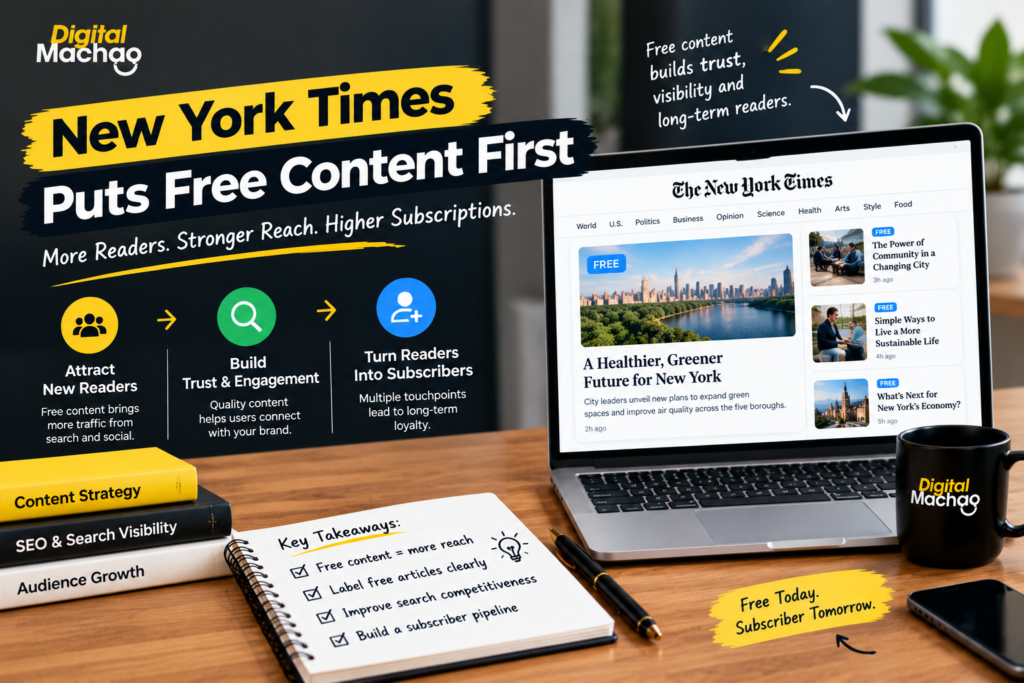
The New York Times puts free content first because a subscription is rarely a first-visit decision. People often need several touchpoints before they register or subscribe. If every article sits behind a wall, a new reader has no way to meet the brand, judge its quality, or build a habit. Free content gives that first meeting a place to happen, and every later step in the funnel depends on it.
Reason One: Free Content Maximizes Reach And Search Competitiveness
Key facts:
- Free articles let a publisher spread coverage of important, competitive stories widely, rather than limiting them to existing subscribers.
- They also help paywalled sites compete in Search with rivals whose content is open to everyone.
- The author suggests paywalls may lower engagement signals such as bounce rate and time on page, which could make ranking harder. He is explicit that this is his belief, not a confirmed fact.
Why This Matters
This is the part of the argument to treat with the most care. Google has not confirmed that paywalls reduce rankings through engagement signals, and the author does not claim it has. What is easier to defend is the simpler point: a story that anyone can read has more chances to be clicked, shared, linked, and cited than one most visitors cannot open. When the New York Times puts free content first on competitive stories, it keeps itself in the contest for attention instead of conceding it to open-access competitors.
Reason Two: Labeling Free Content Encourages Clicks
Key facts:
- Readers may assume an article is paywalled even when it is free, so publishers need to say so explicitly.
- Live blogs are a clear example. Many subscription publishers make them free because they attract search traffic, but few label them as free.
- The author calls labeling a cheap experiment that is worth running.
Why This Matters
This may be the most practical lesson in the whole argument. Years of paywall encounters have trained readers to expect a wall on many publisher sites. If a free article looks like every other article, some people will skip it. A visible free label removes that doubt before the click. The New York Times puts free content first and makes the label obvious, which turns an invisible advantage into a visible one.
Reason Three: Reach Today, Subscribers Tomorrow
Key facts:
- Free content works as an introduction to potential subscribers.
- Because people usually need multiple touchpoints before they register or subscribe, early free visits feed later conversions.
- The author recommends measuring signals that predict subscriptions, such as returning visits or session duration, rather than judging success by traffic alone.
Why This Matters
Judging free content by immediate subscription revenue misses the point. A reader who arrives from search, enjoys a free article, comes back twice, and then subscribes was acquired by that first free visit, even though no payment happened on day one. Publishers who measure only same-session conversions will undervalue free content and may cut the very thing feeding their funnel.
The Wider Context: Even The New York Times Is Feeling Search Pressure
The reason this conversation is urgent is that search traffic is under pressure, even for the biggest names.
Key facts:
- In its second quarter of 2026, the Times added 280,000 digital-only subscribers, down from 310,000 in the first quarter, according to reporting from Nieman Lab.
- It now has 13.3 million subscribers in total, with subscription revenue of $538 million in the quarter.
- CEO Meredith Kopit Levien partly attributed the slower growth to declining search traffic, saying the company is “not immune” to the changing information ecosystem shaped by a few large technology companies.
- The Times is also investing in video, including a Watch tab and a Shows tab in its app, and says reporters explaining their work on camera is “inherently humanizing and trust building.”
Why This Matters
This context shows why the New York Times puts free content first even with 13.3 million subscribers. If a publisher of that size still needs reach to keep subscriber growth moving, smaller paywalled publishers have even less reason to assume subscribers will find them on their own. Declining search referrals make every free, discoverable, well-labeled article more valuable, not less.
What The Author Recommends For Legacy Premium Publishers
Key facts:
- Labeling: make it obvious when content is free.
- Prominence: feature free content in prime homepage positions, since a funnel toward the app or a subscription can start there.
- Measurement: identify metrics that predict subscriptions, such as returning visits or session duration, instead of relying only on traffic.
- Visibility: test “free” badges on featured images, in structured data, and on OG images to improve click-through rates in Search and on other platforms.
Why This Matters
These four recommendations are cheap to test, which is what makes them attractive. None requires rebuilding a paywall or changing a business model. They ask a publisher to be more honest and visible about what is already free, and to measure the right things. The author’s point for publishers already offering free content is simple: make sure your audience knows it is free.
A Practical Checklist: How To Apply This If You Run A Paywalled Site
- Audit what is already free. Live blogs, breaking news, explainers, and evergreen guides are common candidates that are free but unmarked.
- Add a clear free label on article cards, headlines, featured images, and social previews.
- Give free content premium placement on the homepage and key section pages, not only buried links.
- Track leading indicators of subscription intent, such as returning visits, session duration, and registrations, alongside traffic.
- Test “free” signals in search appearance, including image badges, structured data, and OG images, and compare click-through rates before and after.
- Treat engagement-signal theories as hypotheses. Run your own tests instead of assuming a paywall hurts rankings.
Conclusion: Free Content Is An Acquisition Strategy
The New York Times puts free content first because it understands a basic funnel truth: people must discover and trust a publication before they pay for it. Free content makes the discovery possible, labeling makes it visible, and measurement shows whether it is working.
Not every claim here is proven. The idea that paywalls lower engagement signals and hurt rankings is the author’s belief, and publishers should test it rather than assume it. But the core logic holds up well. In a search landscape where referral traffic is under pressure for everyone, including the Times, making free content easy to find and obvious to click is a low-cost move that deserves a place in every paywalled publisher’s plan.
Key Takeaways
- The New York Times puts free content first and labels it clearly, treating it as an audience acquisition strategy rather than lost revenue.
- Free articles help paywalled publishers compete in Search with non-paywalled rivals and spread coverage of important stories.
- Labeling matters. Readers may assume free articles are paywalled, so an explicit free label can improve clicks. Live blogs are a prime example.
- Free content feeds the subscription funnel. People often need several touchpoints before subscribing, so measure returning visits and session duration, not only traffic.
- Treat the paywall-and-engagement theory as a hypothesis, since the author describes it as belief, not confirmed fact.
FAQs
1. Why does the New York Times put free content first if it sells subscriptions?
Because free content works as an introduction. It gives new readers a way to meet the brand, build a habit, and eventually subscribe, since people often need several touchpoints before paying.
2. Does a paywall hurt search rankings?
That has not been confirmed. The author suggests paywalls may lower engagement signals like bounce rate and time on page, but he states this is his belief, not established fact. Publishers should test it on their own sites.
3. Why should publishers label free content as free?
Readers often assume an article is paywalled even when it is free. A clear label removes that doubt before the click, and the author describes it as a cheap experiment worth running.
4. What metrics should paywalled publishers track besides traffic?
Metrics that predict subscriptions, such as returning visits and session duration, because they show whether free content is building the habit that leads to paid conversion.
5. Can smaller publishers copy the New York Times strategy?
Yes. The recommendations, including labeling, homepage prominence, better measurement, and testing free badges in structured data and OG images, are low cost and do not require changing a business model.
People Also Ask
Does the New York Times offer free articles?
Yes. According to the Search Engine Journal analysis, the New York Times features free articles prominently on its homepage and labels them as free.
Is a hard paywall a good strategy for publishers?
The author notes that hard paywalls rarely work for most brands, which is why he recommends treating free content as a deliberate audience acquisition strategy.
How is search traffic affecting the New York Times?
The company’s CEO partly blamed slower subscriber growth in the second quarter of 2026 on declining search traffic, saying the Times is “not immune” to changes shaped by large technology companies.
This article draws on reporting and analysis originally published by Search Engine Journal by Harry Clarkson-Bennett, with subscriber and search-traffic context from Nieman Lab, reworked by the digitalmachao.com team to help publishers and SEOs understand why the New York Times puts free content first.