Shopify Website Development Cost in India
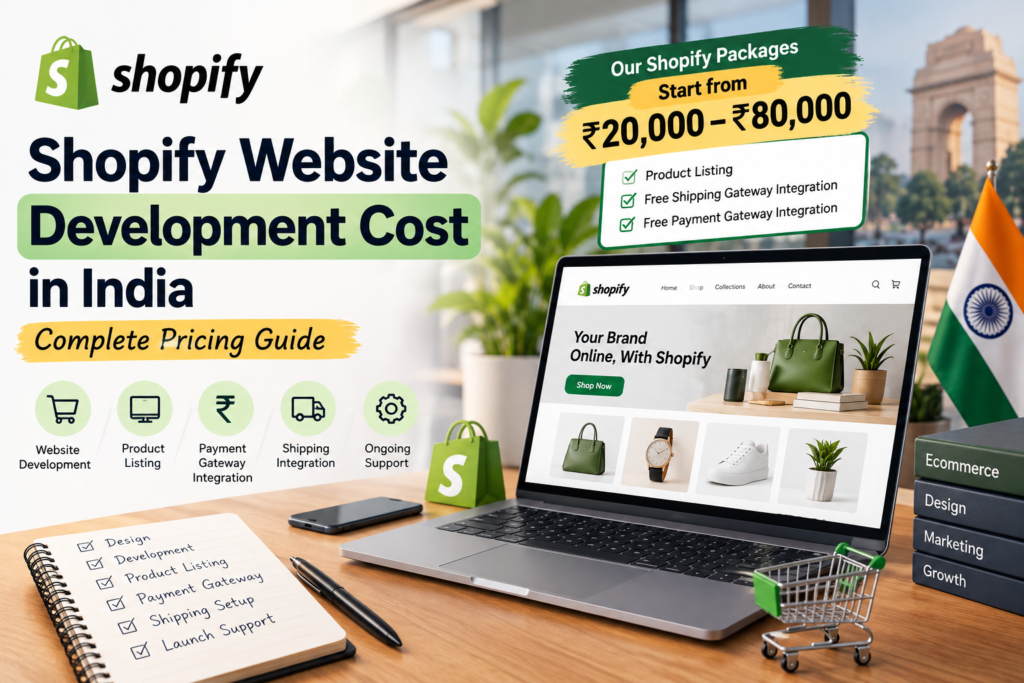
Shopify Website Development Cost in India: Complete Pricing Guide Shopify has become one of the most common platforms for Indian brands that want to sell online without building a store from scratch. It handles hosting, security, checkout and a large part of the technical work, so owners can focus on products and customers. But the first question almost everyone asks is a practical one: what will it actually cost? Quick answer: Shopify website development cost in India varies with store size, design requirements, number of products, integrations, customization, features and ongoing support. A simple store can cost a modest one-time fee, while a heavily customized store with advanced features costs considerably more. Digital Machao’s Shopify website development packages, for example, start from ₹20,000 and go up to ₹80,000, depending on project requirements. Understanding the full cost matters because the agency fee is only one part of the spending. Shopify’s subscription, your domain, paid apps, maintenance and marketing all add to your total budget. This guide breaks each of them down so you can compare quotes properly. How Much Does Shopify Website Development Cost in India? Shopify website development cost in India depends on how much work the store needs. A store built on a ready-made theme with a few products costs far less than a custom-designed store with complex integrations and hundreds of SKUs. Here is a general way to think about project tiers. Treat these as categories, not fixed prices, because every agency scopes work differently. Project type Typical scope Cost direction Basic Shopify website Pre-built theme, light branding, limited products, standard pages, payment and shipping setup Lowest range Standard / customized Shopify website Theme customization, structured collections, filters, extra pages, a few app integrations, basic SEO setup Mid range Advanced / custom Shopify website Custom design and functionality, complex integrations, large catalogue, migration, performance work Highest range The actual figure depends on project requirements. Any agency that quotes without asking about your products, design needs and integrations is probably guessing. What agencies actually charge for Agencies charge for time and expertise. Setting up a store, configuring the theme, uploading products, connecting payment and shipping, testing on devices and launching all take hours of skilled work. The more custom the requirement, the more hours it takes, and the price follows. Shopify Website Development Cost in India Per Month Shopify website development cost in India per month is not a single number, because development is usually a one-time project fee, while the ongoing monthly costs come from the platform and add-ons. Mixing the two is the most common mistake in budgeting. Think of your costs in these layers: One-time development fee: paid to the agency to design and build the store. Shopify subscription: a recurring fee paid to Shopify, based on the plan you choose. Check the current plans on the official Shopify India pricing page, as plans and prices change. Domain: usually an annual cost, not monthly. Paid apps: some apps charge monthly fees for reviews, subscriptions, upsells, email marketing and similar features. Maintenance: optional monthly or annual support for updates, fixes and small changes. Marketing and SEO: ongoing spend that is separate from building the store. Payment gateway charges: transaction fees charged per order by the gateway, not a development cost. So if someone asks what a Shopify website costs per month, the honest answer is: your monthly cost is the Shopify plan plus apps plus any maintenance or marketing retainer, while the development fee is typically paid once, upfront or in milestones. Some agencies offer monthly maintenance plans, and their pricing varies. Factors That Affect Shopify Website Development Cost in India Several decisions push the quotation up or down. Here are the main ones. Number of products and product listing More products mean more time for uploading titles, descriptions, images, variants and pricing. A store with 20 products and one with 2,000 are very different projects. If you want the agency to handle product listing, confirm how many products are included. Theme selection and custom design A ready-made theme is faster and more affordable. Fully custom design takes longer because it involves design work and more development hours. Theme customization sits in between: you start from a theme and adjust layouts, sections and branding. Payment gateway and shipping integration Connecting a payment gateway such as Razorpay or PayU, and a shipping aggregator such as Shiprocket, is standard for Indian stores. Straightforward setups are usually quick. Complex ones, such as multiple gateways, COD rules or region-specific shipping rates, take more effort. Third-party apps and custom functionality Each app integration needs setup and testing. Custom features, such as product bundles, size guides, custom checkout logic or ERP and inventory syncing, are among the biggest cost drivers. Mobile responsiveness, speed and SEO setup Most Indian shoppers browse on phones, so mobile responsiveness is essential. Speed optimization (image compression, lean apps, clean code) and basic SEO setup (page titles, meta descriptions, clean URLs, collection structure) add some work but improve the store’s foundation. Filters, collections and checkout requirements A clear collection and category structure with product filters helps shoppers find items, and it takes planning to set up well. Checkout customizations, such as extra fields or special rules, can add complexity. Ongoing maintenance Post-launch support for updates, bug fixes and small design changes may be included for a short period or billed separately. Shopify Website Development Cost Based on Business Size Rather than fixed prices, it is more useful to match your stage of business to a sensible scope. Small businesses and startups If you are launching with a limited catalogue, a theme-based store is usually enough. Focus on a clean design, product listing, payment and shipping setup, and the essential pages. Avoid paying for advanced features you will not use in the first six months. Growing ecommerce businesses Brands with a growing catalogue usually need theme customization, better collection structure, filters, review and email apps, and basic SEO setup. The budget moves into the mid range because the scope